EEM (psychedelic)
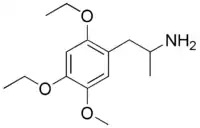
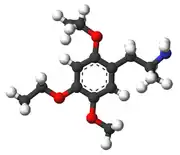
EEM (2,4-diethoxy-5-methoxyamphetamine) is a lesser-known substituted amphetamine. It is a diethoxy-methoxy analog of trimethoxyamphetamine (TMA-2). EEM was first synthesized by Alexander Shulgin. In his book PiHKAL, both the dosage and duration are unknown.[1] EEM produces few to no effects. Very little data exists about the pharmacological properties, metabolism, and toxicity of EEM.
 | |
 | |
| Names | |
|---|---|
| IUPAC name
2-(2,4-Diethoxy-5-methoxy-phenyl)-1-methyl-ethylamine | |
| Identifiers | |
CAS Number |
|
3D model (JSmol) |
|
| ChemSpider | |
PubChem CID |
|
CompTox Dashboard (EPA) |
|
InChI
| |
SMILES
| |
| Properties | |
Chemical formula |
C14H23NO3 |
| Molar mass | 253.342 g·mol−1 |
Except where otherwise noted, data are given for materials in their standard state (at 25 °C [77 °F], 100 kPa). | |
 verify (what is verify (what is  ?) ?) | |
| Infobox references | |

This article is issued from Wikipedia. The text is licensed under Creative Commons - Attribution - Sharealike. Additional terms may apply for the media files.